SkinPen vs Dermaforce: What’s the Difference?
If you are comparing SkinPen vs Dermaforce, the main difference is the technology used. SkinPen Precision Elite uses traditional microneedling to create controlled micro-channels in the skin. Dermaforce combines microneedling with radio frequency energy delivered beneath the skin’s surface.
Both treatments stimulate collagen and may improve acne scarring, fine lines and uneven texture. However, SkinPen is generally chosen for skin remodelling and textural concerns, while Dermaforce RF microneedling may be more appropriate when skin tightening and deeper rejuvenation are also priorities.
The Key Difference at a Glance
SkinPen and Dermaforce both use fine needles to trigger the skin’s natural repair response, but Dermaforce adds radio frequency energy.
In simple terms:
- SkinPen uses controlled microneedling without heat.
- Dermaforce uses microneedling alongside radio frequency heat.
- SkinPen primarily targets texture, pores, mild lines and scarring.
- Dermaforce can address texture and scarring while also targeting laxity, deeper wrinkles and skin firmness.
- SkinPen may involve a course of three to six treatments.
- Dermaforce is generally recommended as a course of three treatments.
Neither option is automatically better. The right treatment depends on your skin, your main concern and the depth of improvement you hope to achieve.
SkinPen & Dermaforce Comparison
| Comparison Point | SkinPen Precision Elite | 3D Dermaforce |
| Treatment category | Traditional microneedling | Radio frequency microneedling |
| How it works | Fine needles create controlled micro-channels | Fine needles create micro-channels while delivering RF energy |
| Heat used | No | Yes |
| Main focus | Skin texture and tissue remodelling | Skin tightening and advanced rejuvenation |
| Often chosen for | Acne scars, pores, mild lines and uneven texture | Laxity, deeper wrinkles, acne scars and uneven texture |
| Typical course | Three to six treatments | Three treatments |
| Treatment spacing | Approximately four weeks apart | Usually one treatment per month over three months |
| Maintenance | Can be repeated as appropriate | A further course may be considered after around ten months |
| Expected downtime | Redness, tightness, dryness or light peeling | Redness, sensitivity and possible swelling |
| Best option for | Clients wanting heat-free skin remodelling | Clients who also want firmer, tighter-looking skin |
Treatment recommendations and recovery vary between individuals. A consultation is needed before confirming which option is appropriate.
How Does SkinPen Microneedling Work?
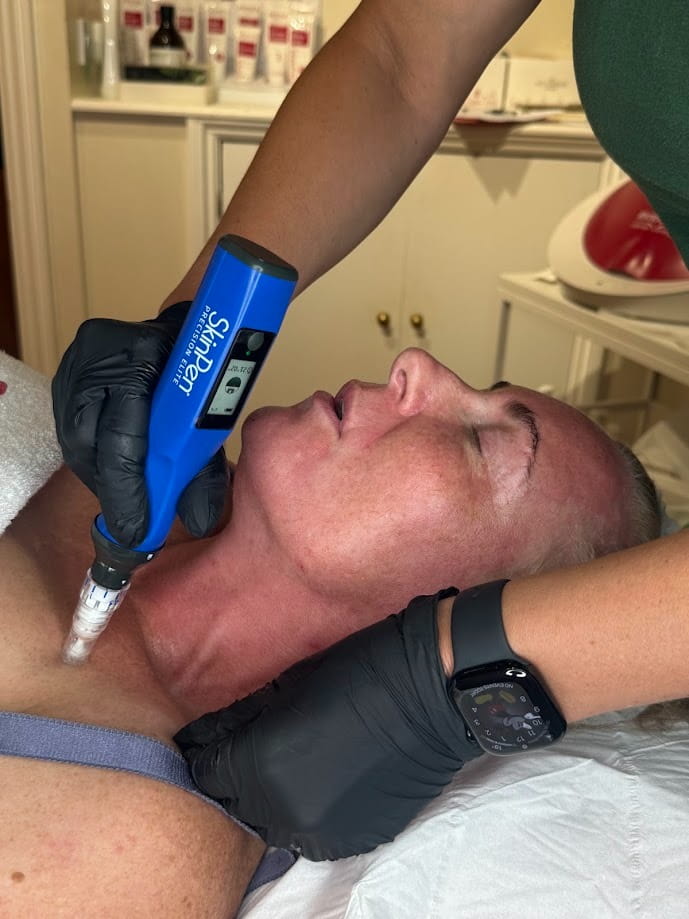
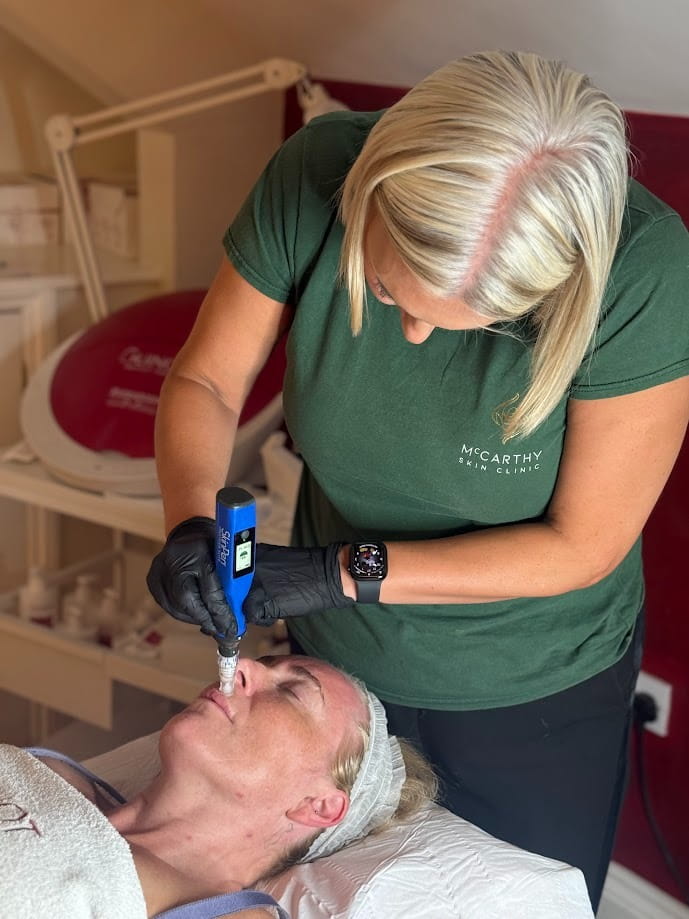
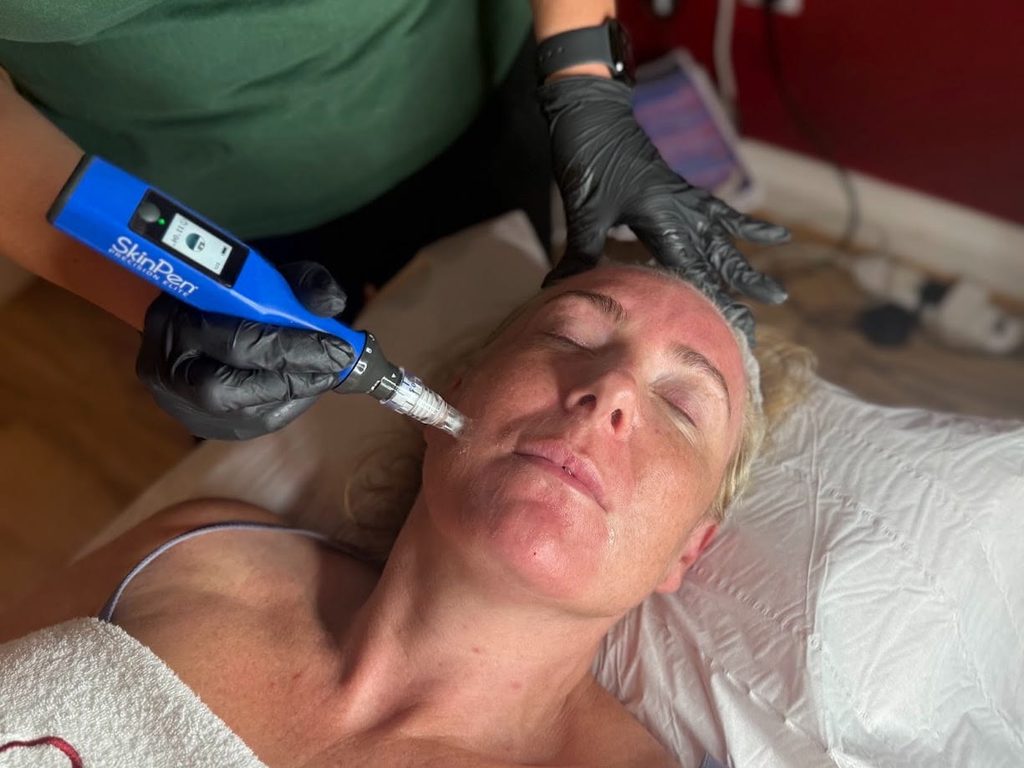
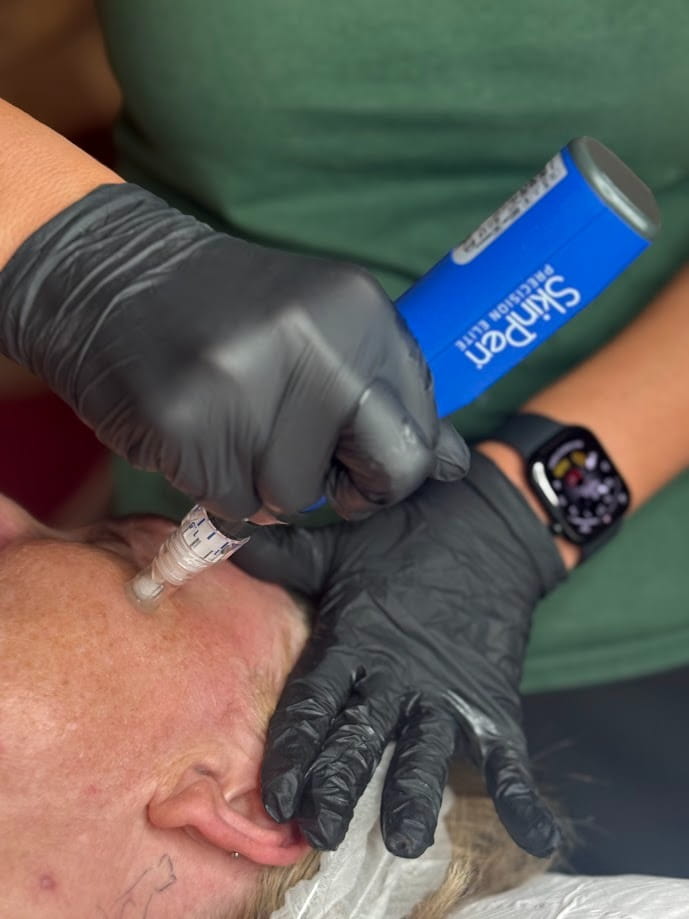
SkinPen Precision Elite is a microneedling pen that passes fine needles over the treatment area to create temporary microscopic channels.
These controlled micro-injuries activate the skin’s natural wound-healing response. During this process, the skin begins to repair and remodel the treated tissue while supporting new collagen and elastin formation.
Unlike RF microneedling, SkinPen does not deliver heat or energy beneath the skin. Its focus is controlled mechanical stimulation.
SkinPen may be recommended for:
- Acne scars
- Surgical scars
- Enlarged pores
- Uneven skin texture
- Mild fine lines
- Wrinkles
- Suitable stretch marks
- General skin remodelling
What Are the Benefits of SkinPen?
The main benefits of SkinPen microneedling relate to skin texture and natural tissue renewal.
It may help:
- Soften the appearance of acne and surgical scars
- Refine visible pores
- Improve rough or uneven skin
- Soften mild fine lines
- Support natural collagen production
- Improve the appearance of suitable stretch marks
- Create gradual, natural-looking improvements
- Remodel the skin without radio frequency heat
SkinPen may appeal to someone whose primary concern is scarring or texture rather than significant skin laxity.
It is also designed for use on different skin types and can be performed throughout the year, subject to suitability, appropriate preparation and sun protection.
How Does Dermaforce RF Microneedling Work?
Dermaforce RF microneedling combines two treatment methods.
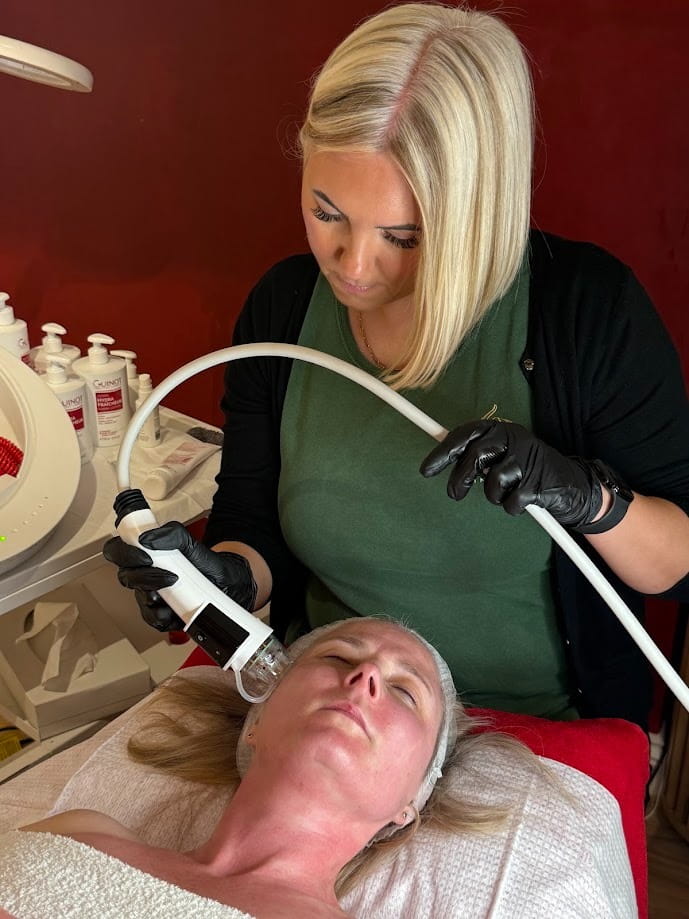
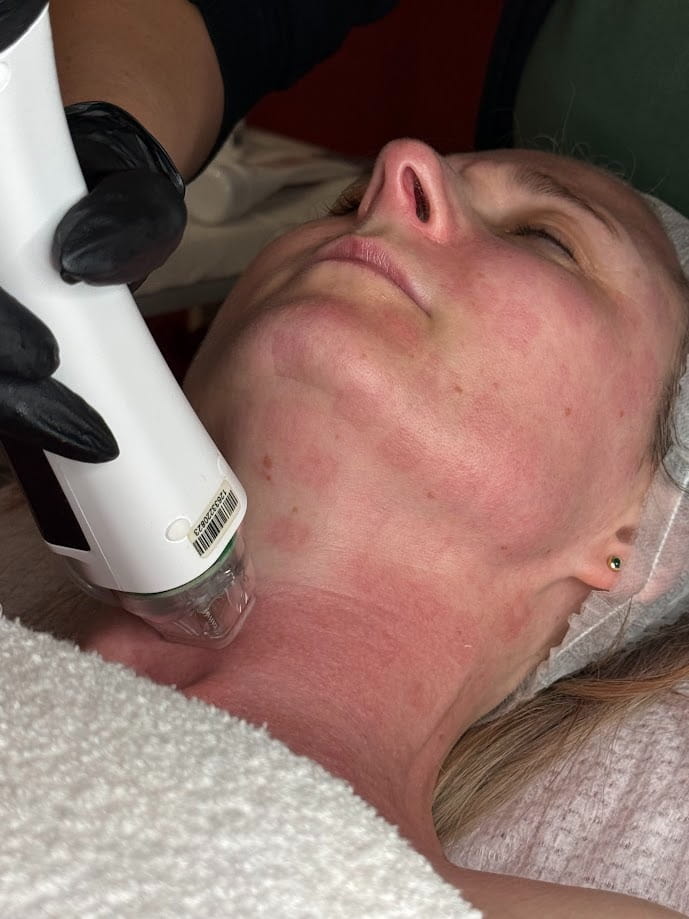
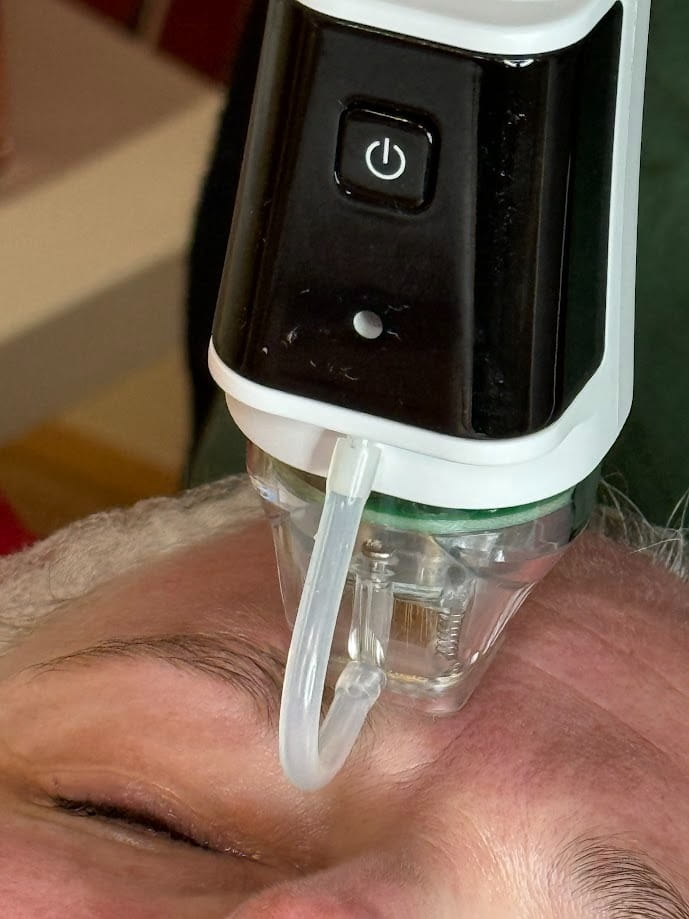
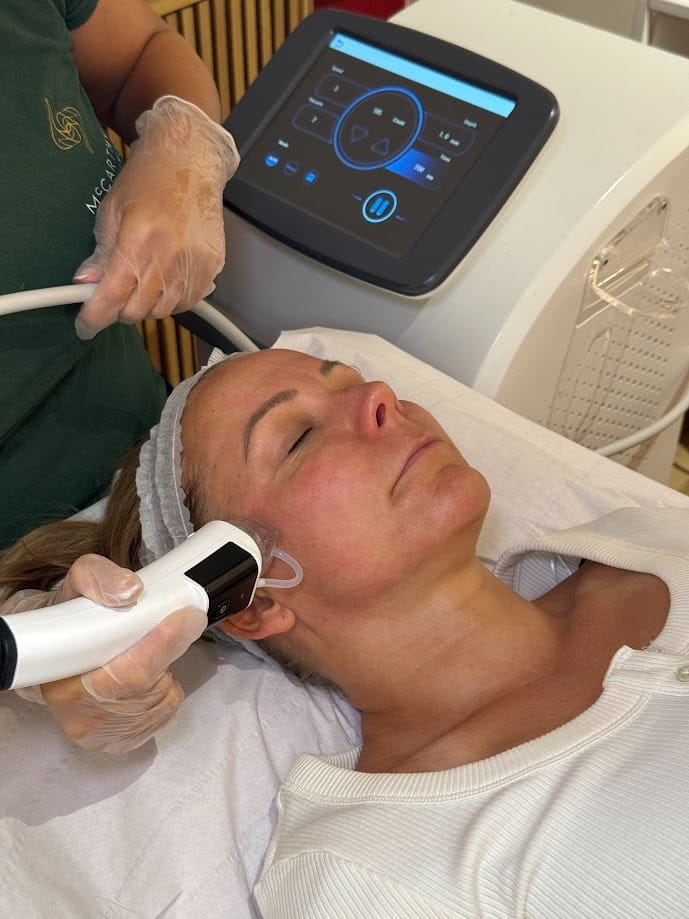
The needles create controlled micro-injuries, as they do during traditional microneedling. At the same time, radio frequency energy is delivered into selected depths of the skin.
This added energy creates controlled heat within the tissue. The combined process stimulates collagen while also targeting firmness and skin laxity.
Dermaforce may be recommended for:
- Fine lines and deeper wrinkles
- Reduced skin firmness
- Mild to moderate skin laxity
- Acne scarring
- Enlarged pores
- Uneven texture
- General facial rejuvenation
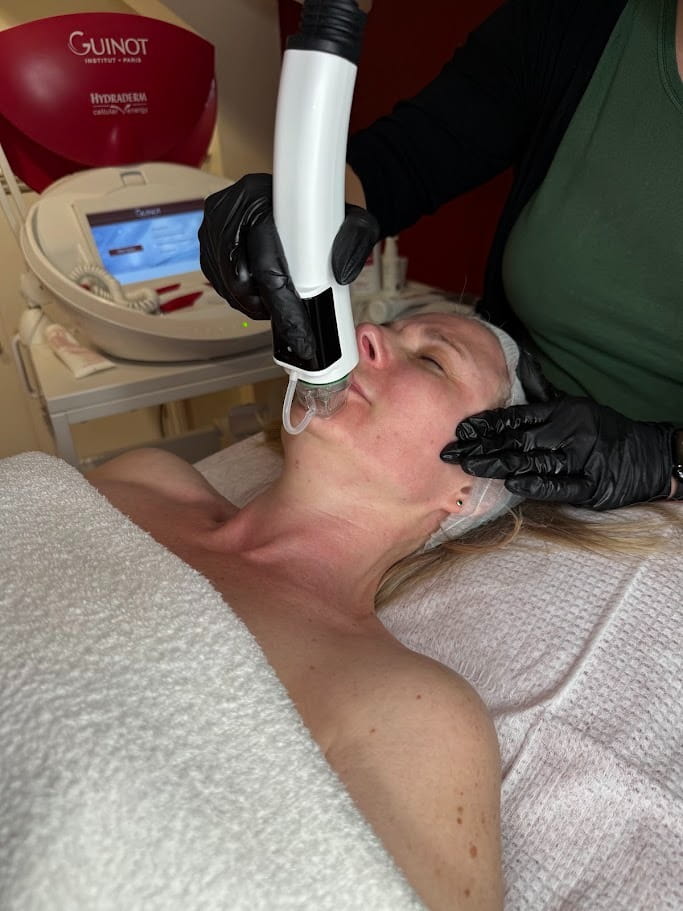
Our 3D Dermaforce Microneedling & Radio Frequency treatment is designed for clients seeking collagen stimulation alongside tightening and textural improvement. McCarthy Skin Clinic’s treatment information confirms that the technology combines microneedling with RF energy to address concerns such as fine lines, scarring, texture and laxity.
What Are the Benefits of Dermaforce?
The addition of radio frequency makes Dermaforce particularly relevant when skin firmness is part of the concern.
Potential benefits include:
- Supporting collagen and elastin production
- Tightening areas of mild skin laxity
- Softening fine lines and deeper wrinkles
- Improving acne scarring
- Refining uneven texture
- Reducing the appearance of visible pores
- Supporting more advanced skin rejuvenation
Dermaforce may be considered when a client wants to address both surface texture and changes beneath the skin.
Both SkinPen and Dermaforce may improve the appearance of acne scarring, but the best choice depends on the scar type, depth and surrounding skin.
SkinPen may be suitable when the main priorities are:
- Uneven texture
- Visible pores
- Mild to moderate acne scarring
- Heat-free skin remodelling
Dermaforce may be considered when acne scars are accompanied by:
- Reduced skin firmness
- More pronounced texture changes
- Deeper lines
- A desire for additional tightening
It is also important to distinguish acne scars from active acne. Microneedling is not usually performed over active, inflamed breakouts. Active acne may need to be brought under control before scar-focused treatment begins.
The answer depends on the depth of the lines and whether skin laxity is also present.
SkinPen may be appropriate for:
- Early signs of ageing
- Mild fine lines
- Rough or crepey texture
- Enlarged pores
- General collagen support
Dermaforce may be more suitable for:
- More visible wrinkles
- Reduced firmness
- Mild skin laxity
- Concerns requiring both remodelling and tightening
SkinPen concentrates on microneedling-induced renewal. Dermaforce adds RF energy, making it the more intensive of the two treatments.
This does not mean that everyone with wrinkles requires RF microneedling. Skin condition, treatment tolerance, goals and medical history all influence the recommendation.
Dermaforce is usually the more relevant option when skin tightening is a primary goal.
Traditional SkinPen microneedling supports collagen production and may improve the overall quality and firmness of the skin. However, Dermaforce also delivers radio frequency energy into the tissue, allowing it to target laxity more directly.
Someone concerned mainly about enlarged pores or acne scars may not need the additional RF element. Someone experiencing sagging, reduced firmness or deeper wrinkles may benefit from it.
This is why treatment should be selected according to the concern rather than choosing the most intensive technology by default.
How Many Treatments Will You Need?
SkinPen and Dermaforce follow different treatment schedules.
SkinPen Treatment Courses
SkinPen is generally recommended as a course of three to six treatments, spaced approximately four weeks apart.
The number of sessions may depend on:
- The type and depth of scarring
- The severity of the texture concern
- The area being treated
- The skin’s response
- The outcome you want to achieve
Further maintenance sessions can be considered when appropriate.
Dermaforce Treatment Courses
Dermaforce is generally recommended as a course of three treatments over three months.
After completing the course, collagen remodelling continues over time. A further course may be considered after a gap of approximately ten months, depending on your skin and goals.
Both treatments rely on the body’s natural renewal processes, so results are progressive rather than instant. Our guide to why repeat treatments are often important explains why a planned course can produce more meaningful improvements than relying on one appointment.
H2: How Does the Downtime Compare?
Both treatments can cause temporary redness and sensitivity, but recovery differs between individuals.
After SkinPen, common responses may include:
- Redness similar to mild sunburn
- Tightness
- Dryness
- Sensitivity
- Light peeling
These responses typically settle over several days.
After Dermaforce, clients may experience:
- Redness
- Warmth
- Tenderness
- Mild swelling
- Temporary dryness or roughness
The intensity of recovery can depend on the treatment depth, area and individual skin response. RF microneedling may produce a stronger reaction because it combines needling with controlled heat.
Downtime should not be judged only by how quickly redness disappears. Skin remains in a healing phase after the visible reaction has settled, so careful aftercare and sun protection remain important.
Can SkinPen & Dermaforce Be Combined?
SkinPen and Dermaforce would not normally be used on the same area during one appointment. However, they may form part of a longer-term treatment plan where different concerns need to be addressed at different stages.
For example, a client might prioritise:
- Improving skin health and controlling active breakouts.
- Treating residual acne scarring.
- Addressing firmness or age-related changes later.
- Maintaining results with professional facials, LED or skincare.
A personalised programme may also incorporate Dermalux LED Phototherapy or selected professional skin treatments, depending on the condition of the skin.
Combination planning does not mean adding as many treatments as possible. Each stage should have a clear purpose, appropriate recovery time and realistic goal.
SkinPen vs Dermaforce FAQs
No. SkinPen uses microneedling without heat. RF microneedling combines fine needles with radio frequency energy delivered into the skin.
SkinPen may have a milder recovery because it does not use radio frequency heat. However, downtime varies according to treatment intensity, area and individual skin response.
Both treatments may improve the appearance of enlarged pores. SkinPen is often sufficient when pores and uneven texture are the main concerns. Dermaforce may be considered when they occur alongside laxity or deeper wrinkles.
No treatment can guarantee complete scar removal. Microneedling aims to remodel the tissue and improve its appearance. Results depend on the scar type, depth, age and individual healing response.
Some clients notice changes in skin texture after the initial recovery period. More significant improvements develop gradually as collagen forms, often over several weeks or months.
SkinPen may suit concerns centred on scars, pores, mild lines and texture. Dermaforce may be more appropriate when tightening, deeper wrinkles or advanced rejuvenation are also priorities. A professional skin assessment is the best way to choose.
Choosing the Right Microneedling Treatment
The most important difference when comparing SkinPen to Dermaforce is that SkinPen uses microneedling alone, while Dermaforce combines microneedling with radio frequency energy.
SkinPen is often selected for acne scars, enlarged pores, mild fine lines and uneven texture. Dermaforce can address similar concerns while providing an additional skin-tightening effect.
Neither treatment is universally better. The right choice depends on your skin condition, treatment goals, medical history and preferred level of intensity.
Arrange a personalised skin consultation to discuss your concerns and understand which treatment may be the most appropriate next step.
Individual suitability and results vary.